

From 17 to 18 June 2024, researchers from INGV and University of Pisa (see Figure 1, left plate), realized a field campaign at Parco naturalistico geotermico delle Biancane (Pisa) to test the new volcanosondes developed by the Space Systems Laboratory of the University of Pisa in the sphere of the VOLANDO project .
The volcanosondes (see Figure 1, right plate), are equipped with sensors of Temperature, Humidity, Pressure, CO2, SO2, HCl, and an Optical Particle Counter (OPC), and are designed for the direct measurements and characterization of volcanic plumes. The case is extremely compact and the total weight is about 0.5 kg.
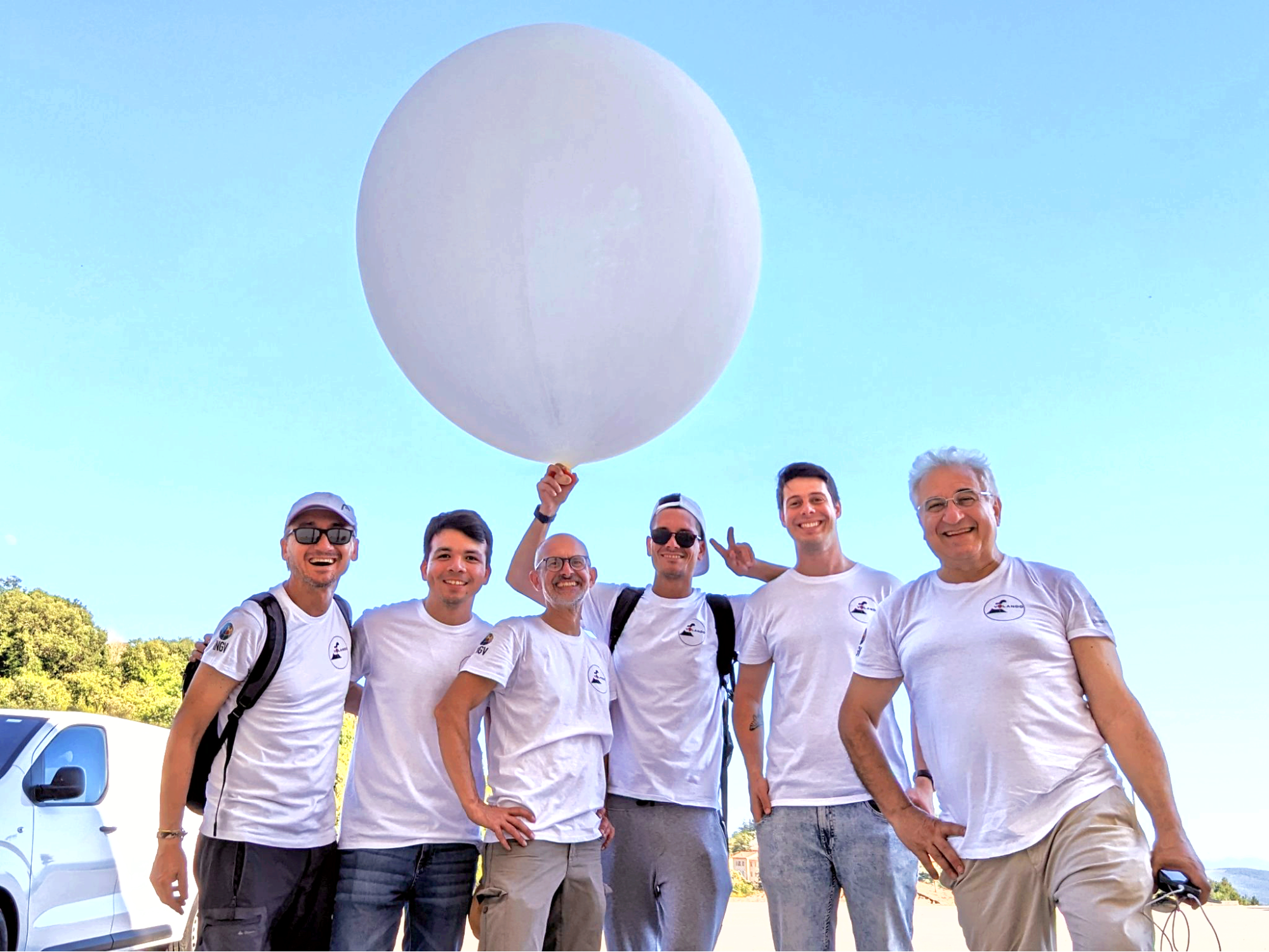

Figure 1. Left plate: INGV and University of Pisa researchers. Right plate: one of the volcanosonde tested at Le Biancane.
Different measurements have been realized, with and without tethered balloon, to test the volcanosonde remote connection, the internal data storage and the gas and particles sensors response to fumaroles emission. Figure 2 shows the balloon preparation and the measurements configuration.
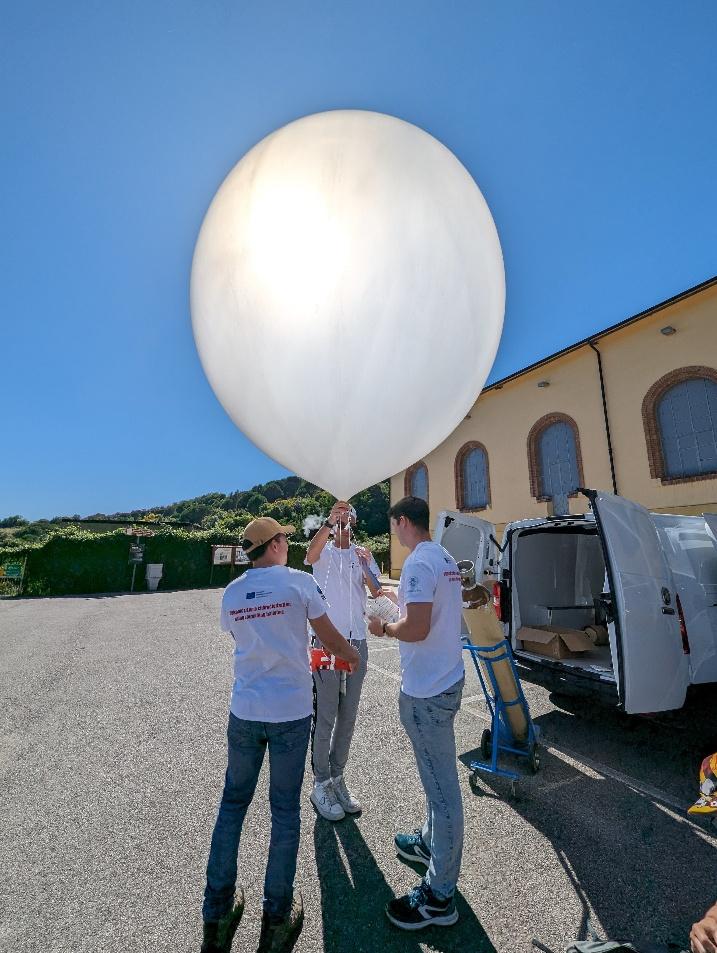
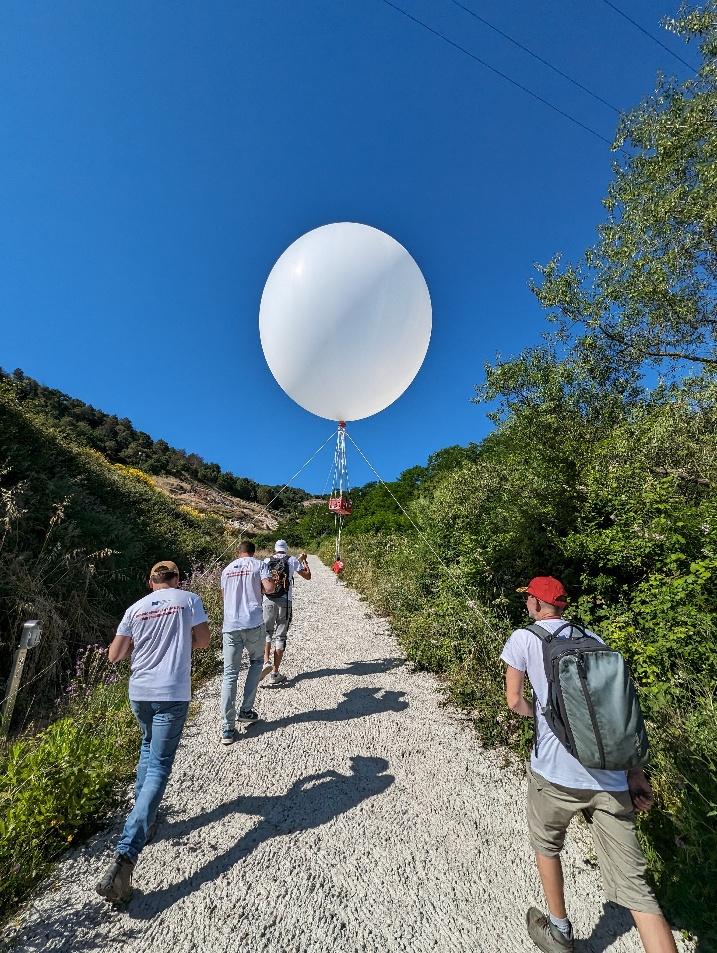
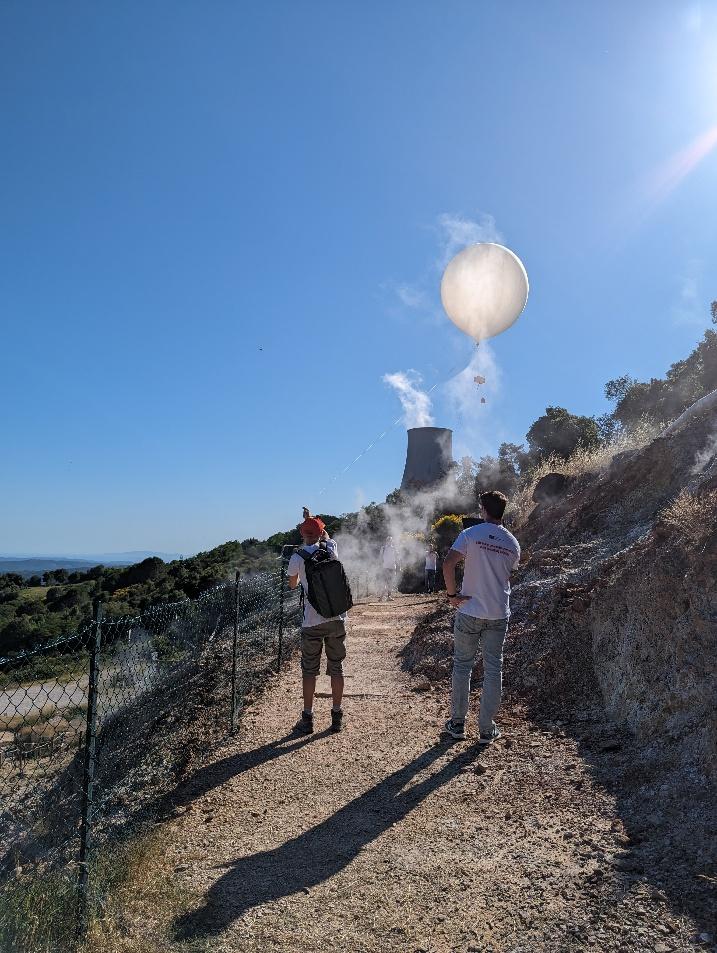
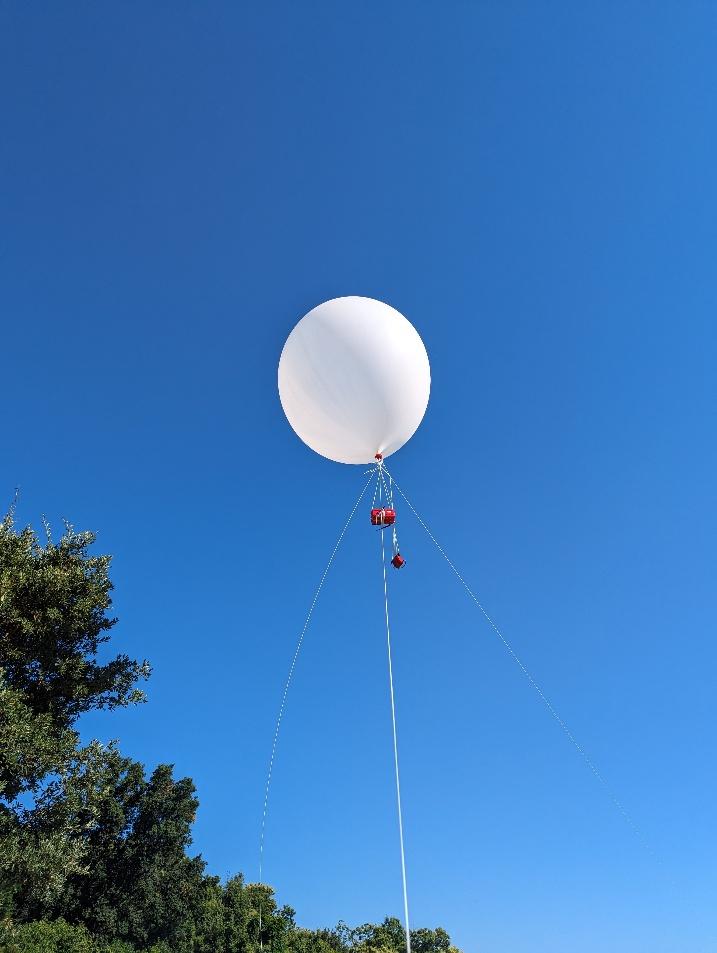
Figure 2. Balloon preparation and measurements over Le Biancane fumaroles the 17th June.
Finally, the data have been downloaded and analysed. In Figure 3 are shown some measurements collected the June 17. The peaks in the middle of the plots clearly indicate the moment in which the volcanosonde goes through the fumarole emission. The negative values of the SO2 sensor can be due to the combination of the very low abundance of this gas in the fumaroles as also the high full scale of the sensor itself. The histogram (right bottom plate) indicate a log-normal distribution for the particles present.
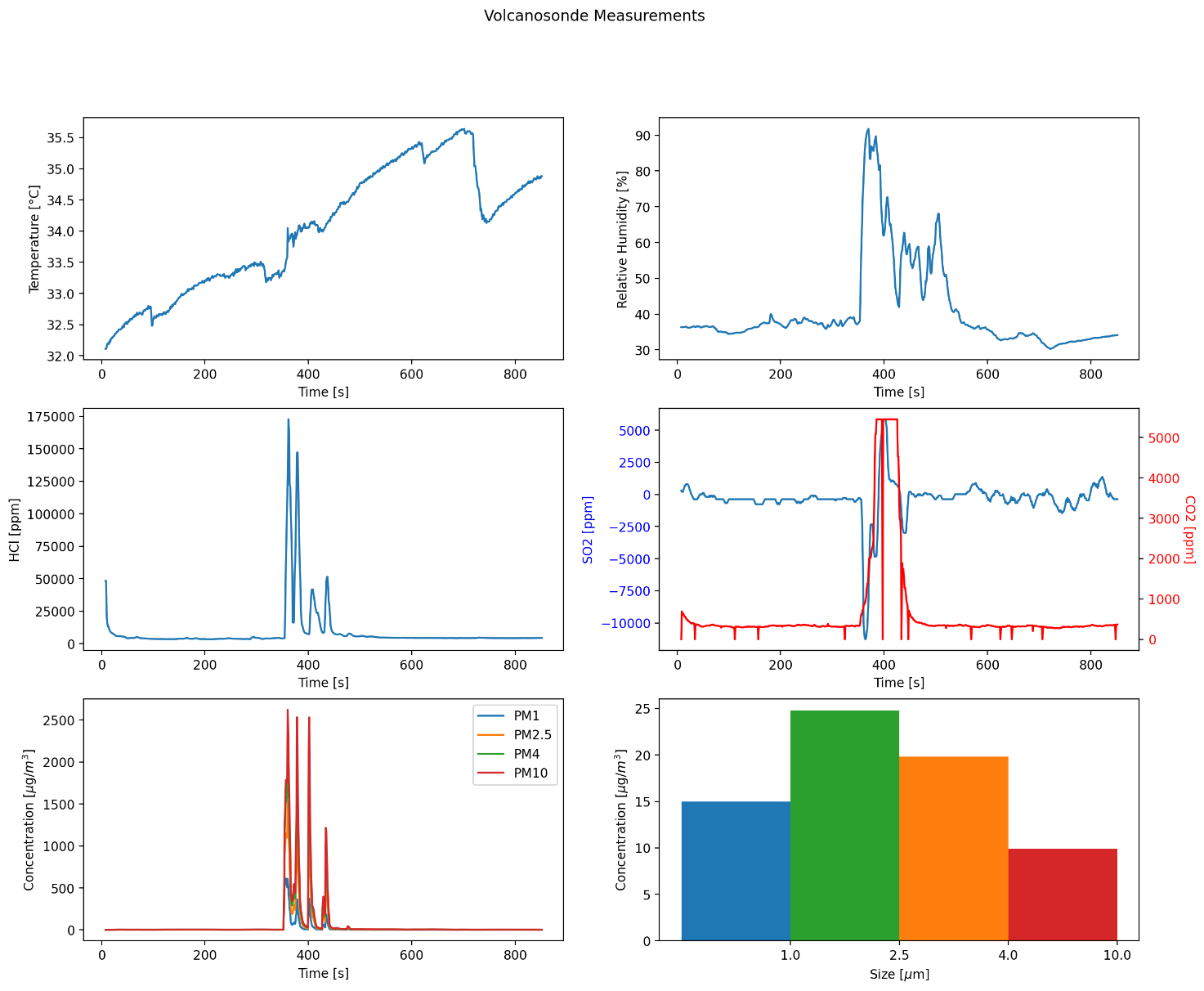 Figure 3. Temperature (upper left plot), humidity (upper left plot), HCl (middle left plot), SO2 and CO2 (middle right plot), PM’s (lower left plot) and Size distribution (bottom left plots) obtained from the measurements realized the 17 of June.
The results obtained from these first tests are very encouraging and indicate the excellent functioning of both the communication (internal and remote) and the response of the different gas and particles sensors.