
WP4 – Geodetic and gravimetric Observations
Planned activities and objectives
WP 4 aims at addressing the long-term and short-term pre-eruptive deformation styles at Campi Flegrei, considering most of the available geodetic data and analyzing new data. The observed deformation is interpreted by inverse modelling and by building advanced models of the plumbing system. The recent activity of uplift/deflation, detected by several modern geodetic techniques, will be considered and related to the study of the historical deformations at Campi Flegrei.
Task 4.1 Geodetic and gravimetric data analysis
An unprecedented set of geodetic data at Campi Flegrei from leveling, tilt, InSAR (Synthetic Aperture Radar Interferometry) techniques, and seafloor measurements will be analyzed and collected.
The long-term archive of leveling data along the Pozzuoli coast will be integrated with
geological and archaeological observations. The database will be integrated with data from the tiltmeter network, presently including 10 stations, available since 1998. Archeological archive data since 35 b.C. will be analyzed for the first time. The capability of InSAR data will be fully exploited in the project to create displacement maps and time series from the whole C-band Envisat data archive (2002-2010) and Sentinel data (since 2014) from the European Space Agency, along with ASI’s (Agenzia Spaziale Italiana) X-band Cosmo-SkyMed satellite data since 2010.
The seafloor measurements produced by the marine infrastructure MEDUSA will be considered, and given the large submerged portion of the CF caldera, these data will significantly improve the constraints for deformation models. Possibly, archive gravimetric data will be taken into account to characterize the hydrothermal/magmatic nature of the past and present unrests.
Task 4.2 Long-term and short term deformation history and characterization of eruptive and unrest volcanic sources
The activity is devoted to analyzing short-term and long-term deformation styles, and their relationship with the volcanic activity and plumbing system at Campi Flegrei. Inverse modelling will be performed to interpret the available data, supporting the geodetic dataset analysis. Numerical models of the volcanic source and plumbing system will be developed based on the updated knowledge of the volcanic activity and including realistic features of the Campi Flegrei volcanic system. The models will account for new insights derived from volcanological/petrological (WP1), geochemical (WP2) and seismological (WP3) studies. The causes for the subsidence/uplift and gravimetric variations will be addressed considering the effect of several factors which may act along with magmatic activity at depth, such as - for instance - temperature and pressure variations within the hydrothermal system, presence of elastic discontinuities and inelastic rheology, and the action of structural discontinuities such as the faults related to both caldera collapse and resurgence of its floor. The models are applied both to the current unrest of the Campi Flegrei, and to characterize the past long-term pre-eruptive phases. In collaboration with task 1.2, initial stress scenarios will be produced for dyke propagation simulations.
WP3 – SEISMIC OBSERVATIONS
The WP3 is focused on the analysis of the seismic signal recorded in Campi Flegrei from 2012 until today to highlight any eventual variation and understand its relation with the volcano dynamic. The WP is divided into 3 tasks that: will analyse the seismic noise recorded in the caldera focusing on its characteristics and variations in time (task 3.1); will describe the statistic of the seismic catalogue that is constantly updated by OV-INGV (task 3.2) and will analyse the seismic fumarolic tremor recorded close to Pisciarelli hydrothermal area to characterize its source mechanism and to verify its possible meaning as indicator of unrest conditions (task 3.3).
In the first year the task 3.1 was planning to organize data and to study the network to be used for the analysis. The data organization is fundamental to start the cross correlation analysis to discriminate between anomalies due changes in the network or due to changes in the volcano structure. Also the knowledge of the eventual variation in the station configurations has to be taken carefully in account when analysing the cross correlation functions.
The task 3.2 planned to analyse the available seismic catalogue evidencing variations in the occurrence time, depth and b-value of the seismicity recorded in Campi Flegrei. We wont to analyse the seismicity in terms of locations and characteristics and to compare the results with the deformation and geochemical parameters.
The task 3.3 proposed to investigate fumarolic tremor at Campi Flegrei caldera using data from INGV permanent seismic network and using ad-hoc temporary deployments of seismic arrays equipped by a new generation of broadband high-sensitivity seismometers. We aimed to characterize the source mechanism and its variation through time and space within the last decade in order to improve our understanding of the magma plumbing system and associated degassing dynamics.
Objectives
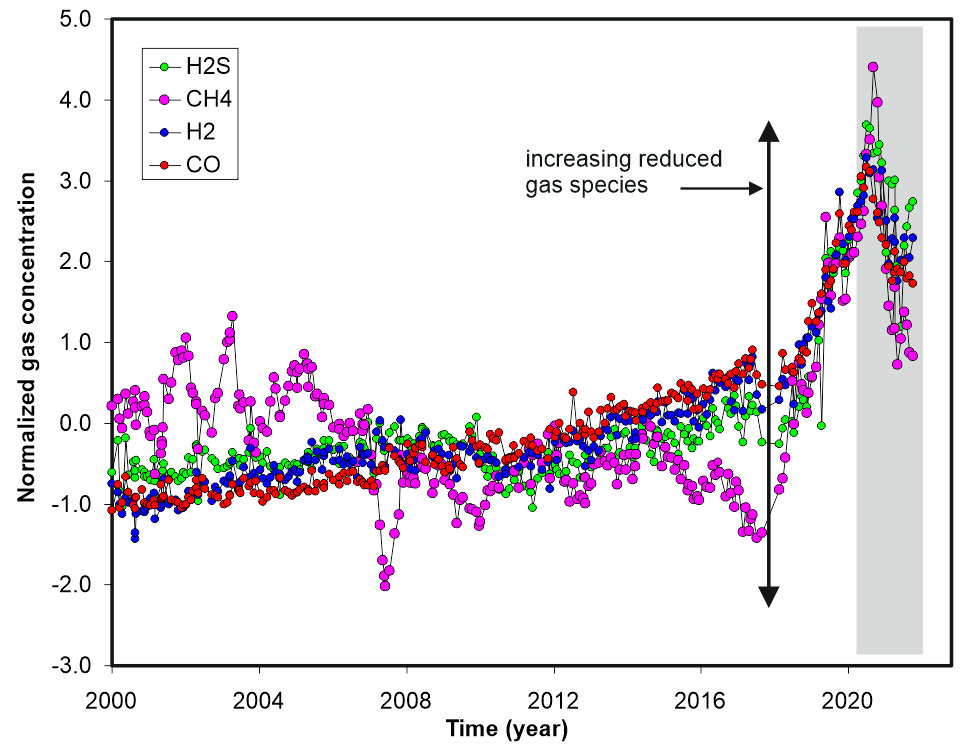 Figure 2.1 Normalized fumarolic gas compositions post 2000.
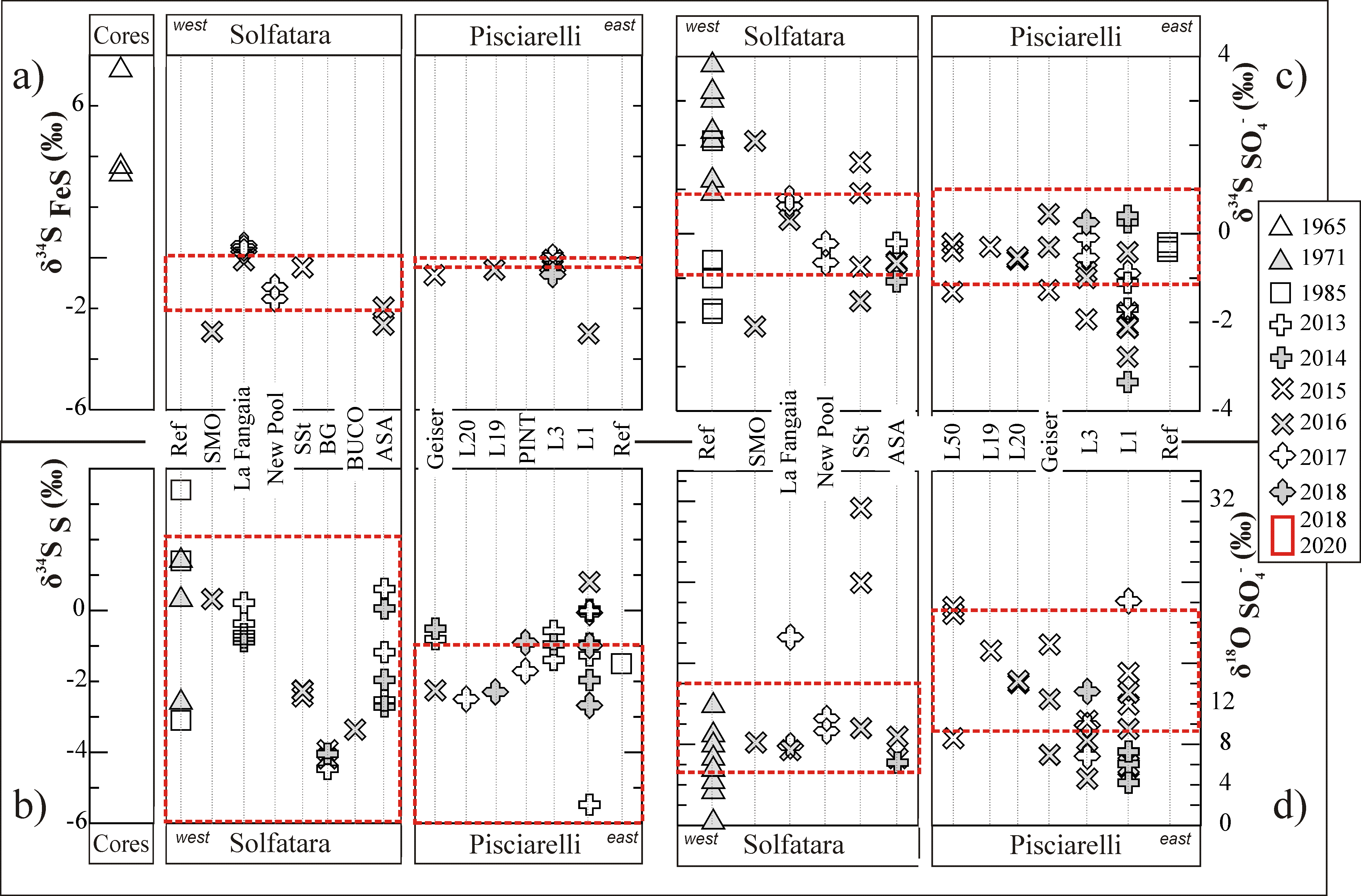 δ18O and δ34O values in various S-bearing minerals through time and at specific hydrothermal sites.
This WP will deal with the dynamics of the hydrothermal system, whose knowledge is based on the large dataset of compositions of fumaroles systematically collected since the 80s and of hydrothermal mineral assemblages investigated since the 2012. The evolution and current state of the hydrothermal system are investigated by innovative geochemical measurements on fumarolic fluid and alteration rock samples collected both on land (Solfatara-Pisciarelli) and underwater (“Secca delle Fumose”) in the Gulf of Pozzuoli (task 2.1 and 2.2).
The main objectives of the WP are to understand the relationships between shallow plumbing system and magma degassing at depth, by means of the pattern of geochemical indicators and the alteration characteristics of rocks measured at the surface. Moreover, statistical analyses of geochemical records will be performed with the aim to quantitatively compare different types of multiparametric data, making efforts towards their statistical combination, and then possibly predict the approaching of rock-failure due to magma movement at depth (task 2.3).
The WP consists of three Tasks:
The Task 2.1 focus on the evolution and the current state of the hydrothermal system with particular attention to the most recent variations, i.e. the clear increase, since 2017-2018, of the concentrations of all the monitored reduced gas species (i.e. H2S, H2, CO and CH4;). This variation interrupts years of relatively oxidized conditions of the system and open important questions regarding the origin of the change and the interpretation in the frame of the Campi Flegrei surveillance.
In the frame of task 2.2, the minero-petrological features of hydrothermal alteration products and the stable isotopic compositions of sulfur-bearing minerals have been determined updating on August 2021 the already existing information (Piochi et al. 2019). This task focuses on the study of alteration products and the secondary mineralizations that mostly occur in the Solfatara-Pisciarelli site. In this area the presence of these minerals is due to the mutual transformation of rocks and infiltrating fluids under dynamic physico-chemical conditions sustained by endogenous heating reservoirs, in an attempt to reach the thermodynamic equilibrium. Planned activity included field survey with collection and multi-methodological minero-petrological investigations of the hydrothermal alteration products at the acidic sulfate setting.
Task 2.3 Planned activity concerned the collection and homogenization of the geophysical and geochemical data. The two groups of variables will be analyzed by means of Principal Component Analysis and both the relations between the groups and within the same group will be discussed. Space-time clustering will characterize sub-processes. The theory of the failure forecast method (FFM; Voight, 1989) and its probabilistic enhancement (pFFM; Bevilacqua et al., 2019), will allows the nonlinear regression and stochastic extrapolation of the failure time forecast updated to 01/01/2022.
ACTIVITIES
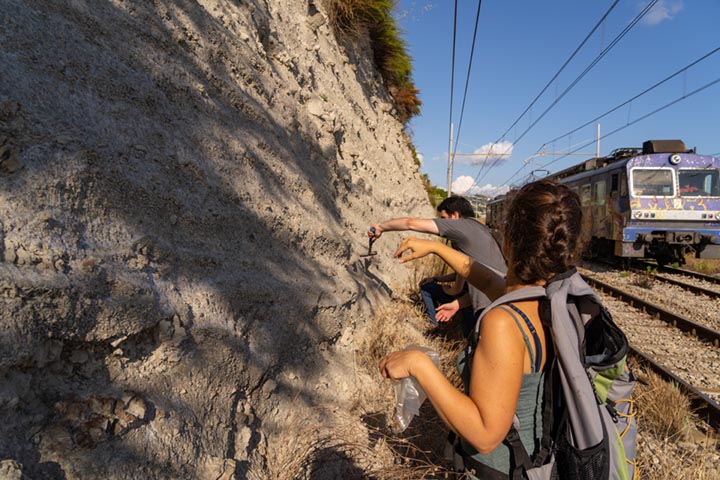 Hydromagmatic deposits of the Monte Nuovo eruption
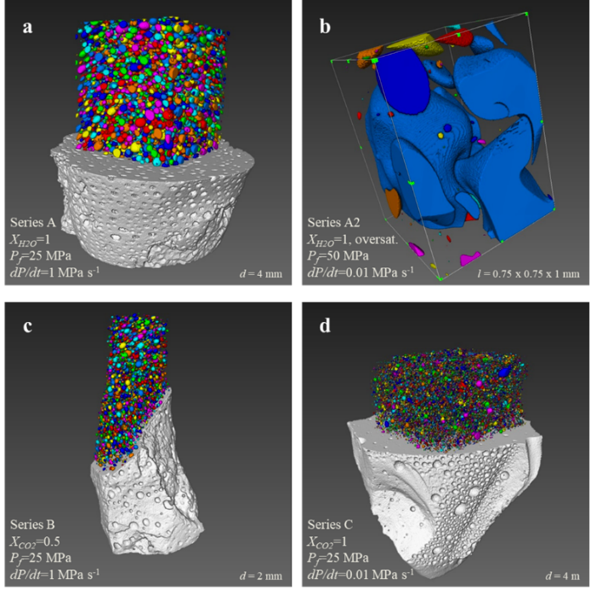 3D volume rendering of representative samples from experimental H2O-rich (a, b; fast and slow decompression, respectively) and CO2-rich (c, d) series.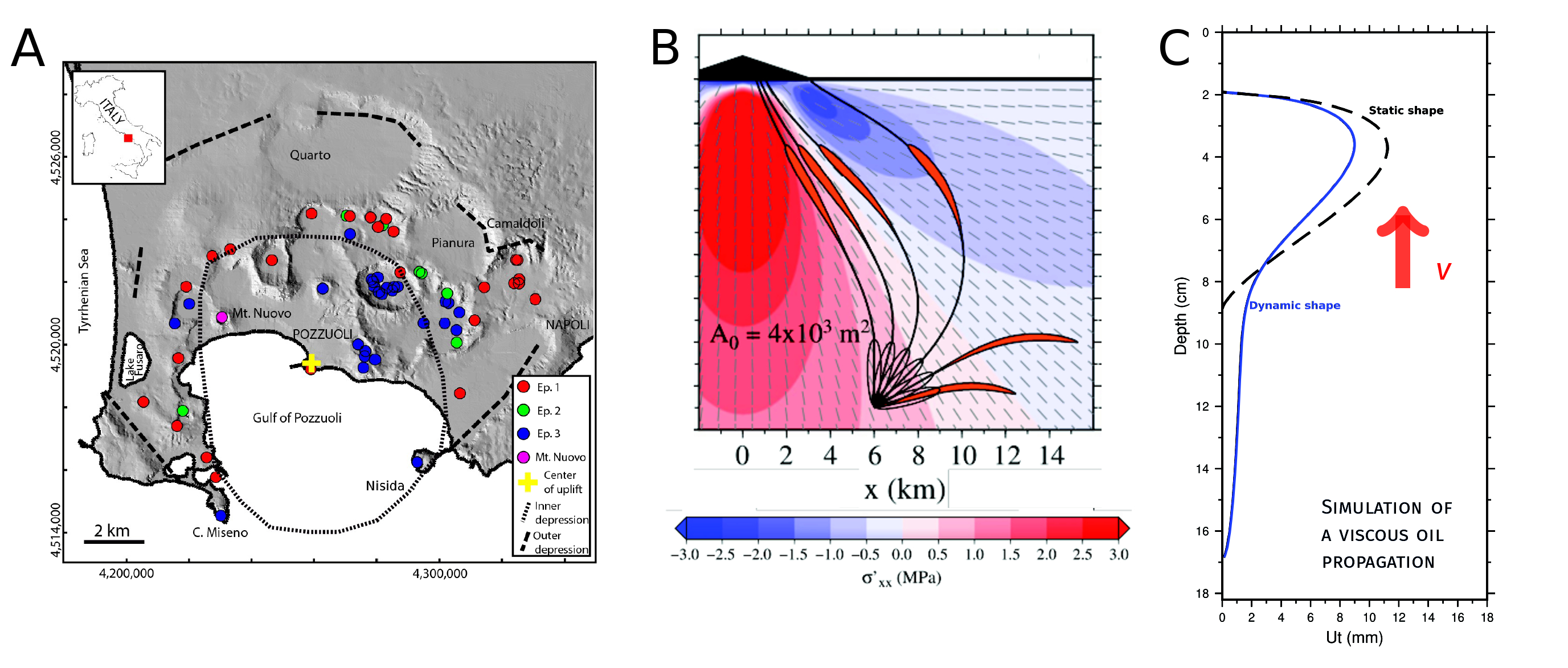
A)Outline of CF caldera with eruptive centers from Rivalta et al., 2019; B) Dyke propagation model output from Maccaferri et al., 2011; C) Different shapes for a dynamic (blue) and stationary (black) fluid filled crack, figure provided by Severine Furst, ISTerre, Chambery, unpublished.
Volcanological and petrological studies
We are performing a detailed study of the 2D and 3D microstructural (e.g. vesicle and crystal size distributions and number density) and geochemical (e.g. geothermobarometers) characteristics of volcanic rocks of reference eruptions of the eruptive history of the Phlegraean caldera, selected in function of the position of the vent, the composition and the Volcanic Explosivity Index (VEI). The research will include the sampling and study of the representative products of the different phases of the eruption (e.g. magmatic and phreatomagmatic phases), with particular attention to the initial phases as they are indicative of the processes and timescale of volcanic conduit opening and therefore of the appearance of the first warning signals. The results will be integrated with investigations (e.g. 3D/4D multiscale exploration of microstructure and physical properties) of subsurface caldera-filling rocks and numerical models on magma ascent. These approaches will allow to define the possible pre-eruptive scenarios (e.g. conditions of pressure, temperature and volatile content of the magma chamber and trigger factors of the eruptions) and syn-eruptive scenarios (e.g. processes and timescale of magma rising in the volcanic conduit) with implications on unrest indicators and possible duration of precursor phenomena, also as a function of the magnitude of the expected eruption.
Solubilities and Decompression experiments
We are performing HT-HP experiments at the University of Göttingen to simulate magma degassing and crystallization in trachytic melts under controlled conditions, and thus to better constrain field observations (natural rocks and surface observables). These are among the first experiments that use not only H2O but also CO2 as volatile phase. The experimental samples are chemically characterized using FTIR/Raman spectroscopy and TGA to explore glass volatile contents and nanolite occurrence. Textural analyses are performed through X-ray microtomography (micro-CT) at the INGV-OV, a cutting-edge technology to quantify microstructure and physical properties of samples in 3D. Isothermal decompressions are conducted at super-liquidus temperature, in wide ranges of final pressures (200 to 25 MPa), decompression rates (0.01 to 1 MPa/s) and volatile contents. The obtained systematic dataset will be integrated with literature data for similar experiments and melts (trachy-phonolites). We are also implementing a numerical tool, based on the methods of moments and tested on experimental results. Isobaric-isothermal phase-equilibria experiments are performed systematically changing wide ranges of temperatures (1100 to 800 °C) and volatile contents. We are collecting data from experiments at 200 MPa, that will be possibly extended to 100 and/or 300 MPa. Such a robust dataset will be useful to shed new lights on magma storage processes at CF.
Numerical simulations
In the context of applying numerical simulations of magmatic dykes ascent within the framework of LOVE-CF project, we first focused on the implementation of a numerical model setup suitable for Campi Flegrei, considering in particular the location of Monte Nuovo eruption site, in order to constrain the geometry of our 2D numerical domain. We computed the so called “backgroud stress” of the crust, which consist in assigning the full crustal stress tensor on a grid within the model domain. We tested the numerical model for dike propagation with this setup, considering two different conditions for the dyke propagation: buoyancy driven, and magma source driven. We explored a range of different constrains for the parameters characterizing the magma and the host rocks properties. We tested a newly implemented “propagating fluid-filled crack” solution which we introduced in the dyke propagation code and allow for accounting for the magma viscosity and dyke propagation velocity (our dyke propagation model would otherwise use a “stationary fluid-filled crack” approximation, neglecting the effect of magma viscosity and propagation velocity on the shape of the intrusion).
OBJECTIVES
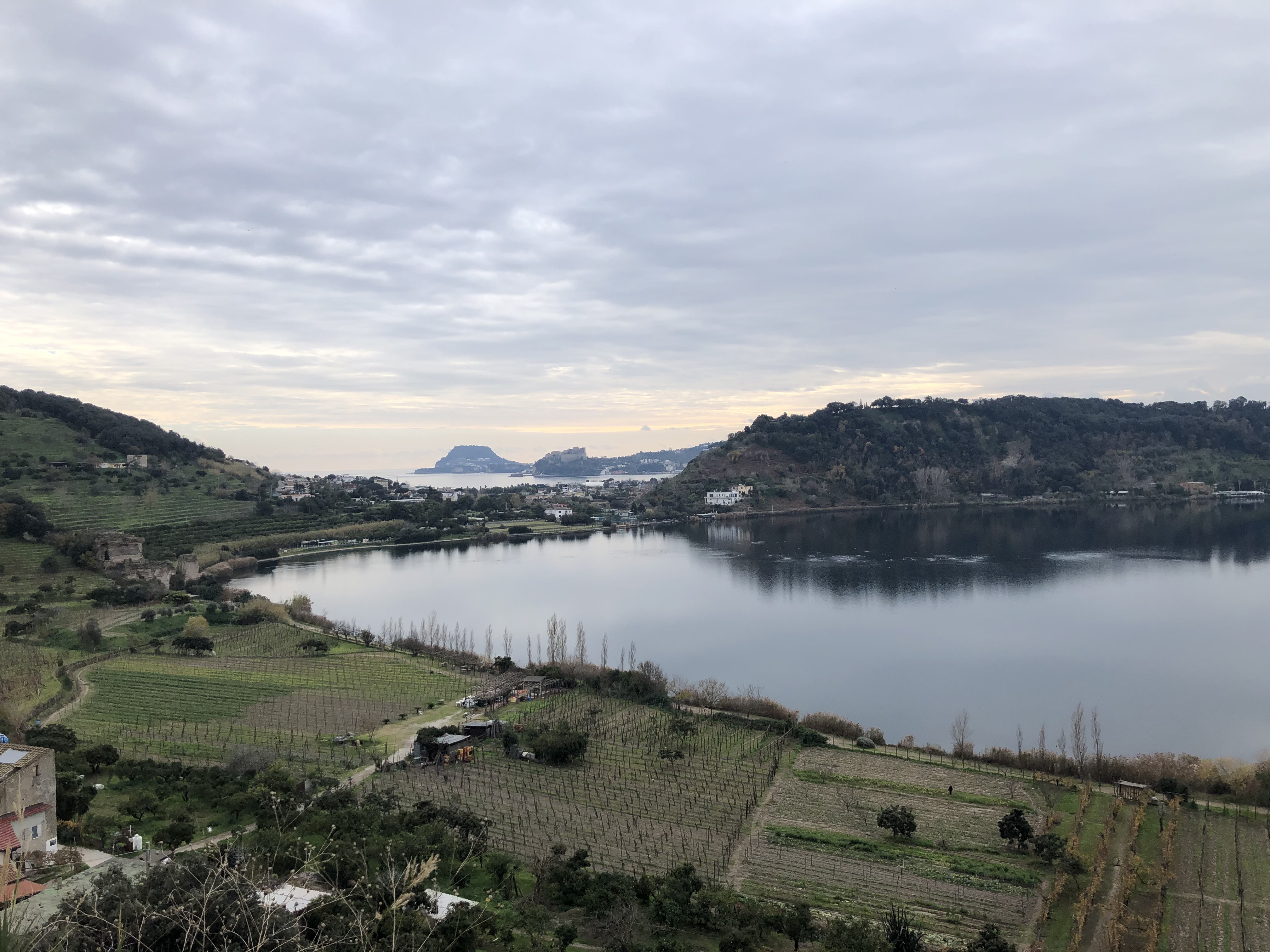 The crater lake of the Averno eruption; in the background the Miseno tuff cone.
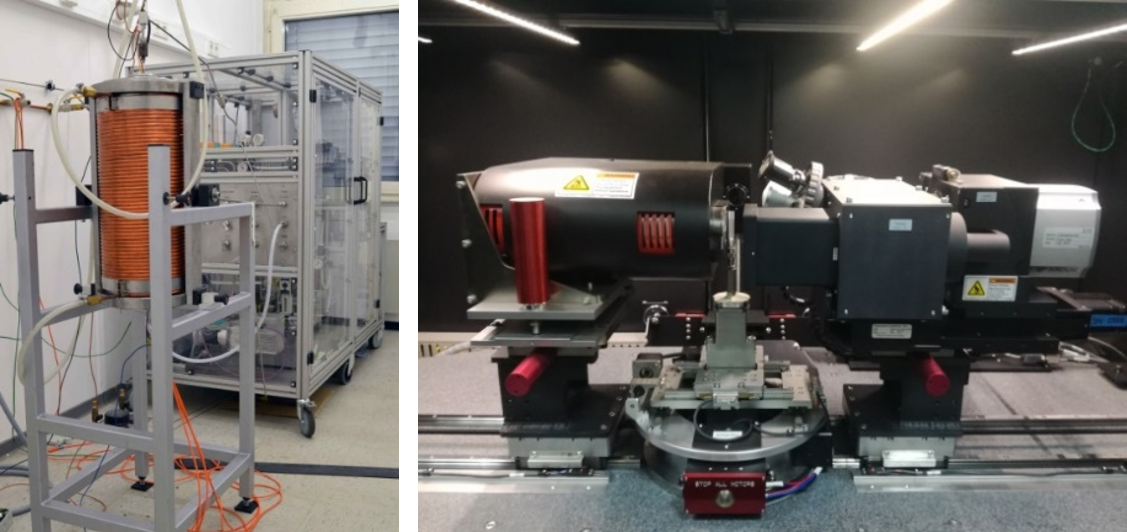 Internally heated pressure vessel equipped with a continuous decompression system at the University of Göttingen and computed Xray microtomography at the INGV-OV.
In this WP, we planned to combine volcanological and petrological observations on natural rocks with results of experiments and numerical models, to investigate the relationship between magma storage and ascent conditions with eruption magnitude and the related unrest indicators. In the last decades, this kind of approach has been successfully applied to andesitic-rhyolitic magmas. However it was limitedly employed so far for alkaline Campi Flegrei magmas. Particularly, we focus on trachytic volcanism that is the most representative magma composition in the whole history of the caldera, having fed most of the eruptions of different VEI, including the last Monte Nuovo event, and all the most hazardous ones.
The petrological and quantitative 3D micro-textural features of natural trachytic rocks from representative Campi Flegrei eruptions of different magnitude (for instance: Agnano Monte Spina, Astroni-Fossa Lupara, Averno, Baia-Fondi di Baia, Monte Nuovo), will be combined with those of trachytic samples produced by phase-equilibria and decompression experiments (carried out under various P, H2O and CO2 contents, dP/dt conditions, thus simulating a large range of pre- and syn-eruptive states), as well as validated with numerical models on magma ascent and integrated with investigations on subsurface caldera-filling rocks (task 1.1). Furthermore, the information retrieved on natural case studies will be used to reconstruct the emplacement and propagation dynamics of dykes feeding past eruptions by using ad-hoc numerical simulations (task 1.2).
Task 1.1) Mechanisms and timescale of magma storage and ascent and their relationship with unrest indicators.
This task regards the volcanological, petrological and 3D textural analyses of natural samples of selected Campi Flegrei eruptions with different magnitude and their combination with those of samples obtained by phase-equilibria and decompression experiments. The merged data, integrated with the results of numerical models on magma ascent dynamics and subsurface rocks features, will allow defining storage conditions of eruptible magmas, factors and timing of eruption trigger, processes and timescale of magma transfer and their influence on conduit opening and propagation, as well as their relationship with unrest indicators and magnitude of eruptions. All the obtained data will be also explored through the use of neuronal networks.
Task 1.2) Emplacement and propagation dynamics of feeding dykes.
In this task, the emplacement and propagation dynamics of dykes feeding past eruptions are addressed by combining the available information from past studies, new field observations, and ad-hoc numerical simulations. In particular, we plan to apply our models to the eruptions of Monte Nuovo, Astroni-Fossa Lupara and Averno: these events were fed by multiple vents aligned along fissures which displayed a clear migration pattern during the eruption. We will focus on short- and long-term changes in the activity of the volcano during the pre- and post-eruptive phases of these events, in order to infer crucial parameters such as the intruded vs erupted volumes, their duration, and the depth of the magma source. This information will be used to constrain numerical models and simulate the propagation of the magmatic dykes which fed those eruptions. In turn, the numerical simulations will provide better constrains on the mechanical conditions which had driven the lateral migration of vents, improving our knowledge on other important parameters characterizing the state of the system at the time of those events, that are very difficult to access otherwise.